Facebook Ads for HVAC Companies: What Actually Books Jobs, and When to Hire an Agency
9 Min Read

Table of Contents
- 01Why Facebook still works for HVAC companies
- 02What do Facebook ads cost for an HVAC company?
- 03Targeting the homeowners who actually need HVAC work
- 04Offers and creative that stop the scroll
- 05Instant forms, speed to lead, and the follow up gap
- 06The mistakes that quietly drain an HVAC ad budget
- 07Should you run Facebook ads yourself or hire a home services Facebook ads agency?
- 08Where Facebook fits alongside Google and your other HVAC channels
- 09The practical next step
- 10Frequently Asked Questions
- 11Citations and References
Facebook ads work for HVAC companies. They just do not work the way most owners expect.
- Run the wrong way: they bring clicks, cheap form fills, and quiet phones.
- Run the right way: they put your trucks in front of homeowners before the first heat wave sends everyone searching at once.
This guide covers what actually books jobs on Facebook and Instagram for an HVAC business, the mistakes that quietly drain a budget, and when hiring a home services Facebook ads agency is worth it.
Why Facebook still works for HVAC companies
Facebook and Instagram are both owned by Meta and they are a different tool than Google. That difference is the whole game.
Google is demand capture. A homeowner already typed “AC repair near me” and is ready to book. You meet them at the bottom of the funnel.
Facebook is demand creation. You interrupt a homeowner scrolling family photos and funny memes who wasn’t thinking about their system at all.
That makes Facebook weaker for the no AC call at 2 p.m. in July, but stronger for the jobs homeowners put off like the 12 year old system limping through one more summer, the furnace that is one cold snap from quitting, and the maintenance plan they keep meaning to sign up for. It is also how you stay in front of past customers between tune ups. Running it for two weeks in a mild shoulder season and expecting the phone to ring is a misreading of the tool.
What do Facebook ads cost for an HVAC company?
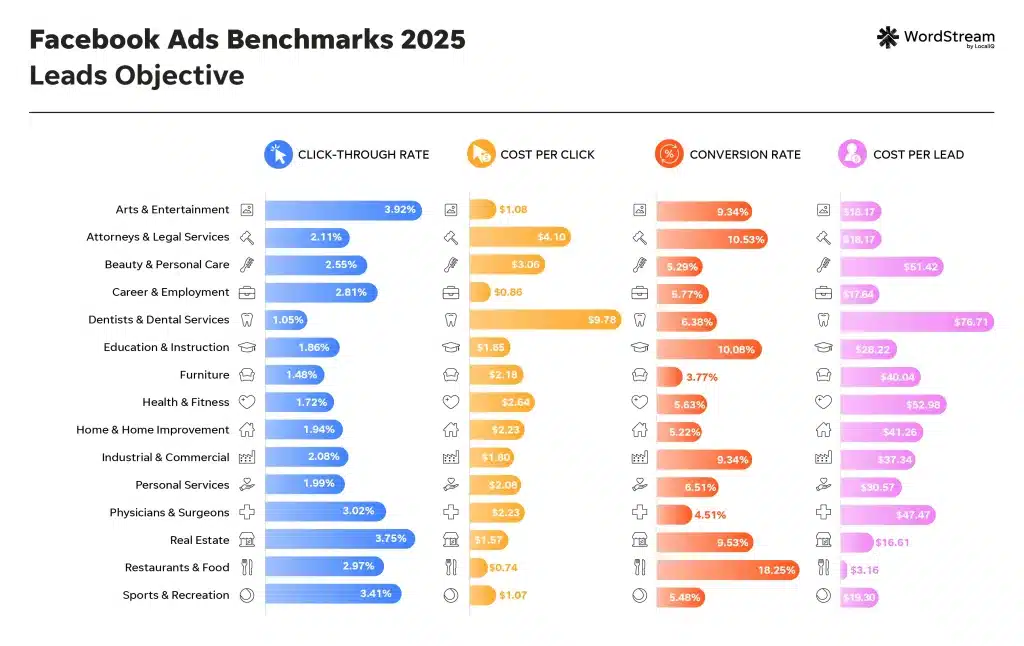
There is no flat number, but there are real anchors. LocaliQ’s 2025 Facebook advertising benchmarks put the average cost per lead for the Home and Home Improvement category, where HVAC sits, at about $41 on lead campaigns, against a roughly $28 average across all industries, with a click through rate near 2% and a landing conversion rate above 5%. Read those as a starting map and not a promise.
Your real number depends on how competitive your market is. And HVAC is competitive, with franchises and private equity backed shops bidding hard in most metros. Your real numbers also depends on how good the offer is, whether the creative earns attention, and (more than anything) what you count as a lead. A raw form fill is cheap. A booked system replacement costs more to source, and it is the only number that matters. Give a new campaign at least 60 to 90 days so Meta’s system has enough conversions to learn from, and measure cost per booked job and not cost per click.
Targeting the homeowners who actually need HVAC work
HVAC lives and dies on the service area, so the first job of targeting is geography. Draw the radius around the zip codes your trucks actually serve, not a whole metro you will never drive to. From there, you can layer in homeownership and the age ranges that match your average buyer, and in older neighborhoods where the systems are aging, that context matters. This is also where a lead enrichment tool like ServiceCall earns its keep. It takes the leads already in your CRM and adds the property, equipment, and financial detail you cannot see from a Facebook form alone, things like the age of the system, whether the home is a repair or a replace candidate, and whether the owner has the equity to finance a new unit. That intelligence does two things for your targeting. It tells you which leads to call first, and it sharpens the picture of your best customer, so the lookalike audiences you build next are seeded from the homeowners most likely to book real work.
The bigger shift in the last two years is letting Meta’s Advantage+ audience find more people like your best customers instead of boxing the system into a tiny hand picked list. Lookalike audiences built from your past install and maintenance customers are some of the most reliable targeting an HVAC business has, because they start from people who already paid you for real work. The mistake runs in both directions. Too broad and you pay to reach renters two counties over who will never call. Too narrow and the system never gathers enough data to optimize.
Offers and creative that stop the scroll
On Facebook, the creative is the campaign. Nobody is searching for you, so the ad has to earn a half second of attention in a crowded feed. What works for HVAC is not polished and corporate. It is real.
A few ideas:
- A before and after of an install you finished this week
- A 20 second phone video of a tech showing a homeowner a failed capacitor or a filter that has not been changed in a year.
- A genuine review from a neighbor two streets over.
- A clean seasonal offer with a reason to act now, like the pre summer AC tune up, the fall furnace check, or financing on a new system this month.
Video and Reels tend to get more reach than static images for local accounts, and they do not need a studio. A tech with a phone and a steady hand beats a stock photo every time.
The offer carries as much weight as the footage. “We do great work” is not an offer. “$89 AC tune up this month, same week slots open” or “0% financing on a new system” is. Give the homeowner a specific reason to stop scrolling and a specific thing to do next.
Instant forms, speed to lead, and the follow up gap
Most HVAC leads from Facebook come in through instant forms, Meta’s native lead form that captures a homeowner’s name, phone, and email without sending them off to your website. The low friction is why they produce volume. It is also the trap.
A lead who tapped a form in three seconds is not the same as someone who called you. A $12,000 system replacement lead that sits in an inbox for an hour is cold or already talking to a competitor. The HVAC shops that win on Facebook treat speed to lead as the whole job. The form feeds straight into a CRM or a text, someone reaches out fast, and the follow up runs for days, not one missed call. Pair the form with tracking that survives Apple’s App Tracking Transparency changes, usually Meta’s Conversions API sending real events server side, so the system learns to optimize toward booked installs instead of cheap taps.
The mistakes that quietly drain an HVAC ad budget
Most failing HVAC Facebook accounts share the same short list of leaks. Any one of these is worth fixing before you spend another dollar:
- Boosting posts instead of running real lead campaigns, which buys reach with no lead objective and no optimization.
- Targeting a whole metro instead of the zip codes your trucks serve.
- Sending clicks to a slow homepage instead of a page built for that exact service and offer.
- Collecting instant form leads with no fast, systematic follow up.
- Judging the account in week two, or only during a mild shoulder season, before it can learn.
- Running one static image for months and wondering why results fade as the audience tires of it.
- Ignoring seasonality, so the same budget that coasted in April gets exhausted by noon on the first 100 degree day.
- No conversion tracking, so the account optimizes toward form fills instead of booked jobs.
Should you run Facebook ads yourself or hire a home services Facebook ads agency?
Plenty of HVAC owners start these themselves, and for a while that is the right call. If you can shoot honest video, write a clear seasonal offer, set a real service area, and follow up fast, you can get a simple campaign off the ground.
Where it gets expensive is the part that never shows up in the ads manager.
- Server side tracking with the Conversions API.
- Creative testing on a schedule so the account does not go stale mid summer.
- Audience layering.
- Reading the data well enough to move budget before a heat wave or a cold snap costs you.
That daily, technical work is exactly what a good home services Facebook ads agency takes off your plate.
A strong one shows you cost per booked job and not just cost per lead, keeps your creative fresh through the seasons, and integrates Facebook with your Google and Local Services Ads instead of running it on an island.
The red flags are the opposite:
- Guaranteed lead counts
- No clear tracking
- Recycled creative
- Any refusal to let you keep full ownership of your ad account and data.
No honest partner can promise a specific number of leads, because your close rate, how fast your office answers the phone, and your market all sit outside the ad account.

Where Facebook fits alongside Google and your other HVAC channels
Facebook is not a replacement for search. It is the top of the funnel that feeds it. Google Ads and Local Services Ads catch the homeowner whose system just died and who is ready to book today, while Facebook builds the demand and the familiarity so more of those searches happen, and so past customers remember you first for the next tune up or replacement.
The strongest HVAC programs run these channels together, share data between them, and send every click to a fast, conversion focused landing page instead of a brochure homepage. Treated that way, a modest Facebook budget compounds the return on everything else you spend. If your paid ads are spending without a clear return, the companion read on why home service ads fail and how to fix them walks through the tracking and landing page fixes in more detail.
The practical next step
If your Facebook ads have brought clicks and quiet phones, do not conclude the platform is broken. 9 times out of 10 the offer, the follow up, or the tracking is the leak, and all three are fixable. Start with one clear seasonal offer, real video, a tight service area, and a follow up system that moves in minutes. Measure booked jobs, give it a full season, and scale what proves out. If you want a second set of eyes on what your HVAC campaigns are actually doing, book a call with our team and we will walk through it with you.
Frequently Asked Questions
At the roughly $41 average cost per lead home improvement advertisers saw on Meta lead campaigns in 2025, $1,000 a month buys around 20 to 25 leads, enough to test an offer but tight for Meta’s system to optimize on. In a competitive metro with higher costs, plan closer to $1,500 to $2,500 so the account gathers enough conversions to learn.
Home improvement advertisers, HVAC included, averaged about $41 per lead on Meta lead campaigns in 2025, against roughly $28 across all industries, so a lead in that range is healthy. Cost per booked job matters more, since a $20 form fill that never answers the phone is worse than a $60 lead that turns into an install.
They solve different problems, so neither wins outright. Google and Local Services Ads capture the homeowner whose system just died, while Facebook creates demand for replacements and maintenance plans, and the two return more run together and sharing data than either does alone.
Expect a few weeks for Meta’s system to gather enough conversions to stabilize, and 60 to 90 days before the trend is clear enough to judge. Seasonal demand swings distort anything shorter than a full month, so do not kill a campaign after two slow weeks in a mild shoulder season.
Look for tracking that reports cost per booked job and not just cost per lead, creative tested on a schedule, and honest ranges instead of guaranteed lead counts. A good partner also leaves you with full ownership of your ad account and data, so you keep everything if you ever leave.
Citations and References
- LocaliQ, “Facebook Advertising Benchmarks for 2025,” updated October 2025. (Source: LocaliQ) localiq.com
- Meta for Business, “Lead Ads: Generate Leads for Your Business.” (Source: Meta for Business) facebook.com/business
- Meta Business Help Center, “About lead ads with instant form.” (Source: Meta Business Help Center) facebook.com/business/help
Looking to Elevate Your Digital Marketing?
See How Our Expert Team Can Guide You!
Let’s Build Something AwesomeThe Wave Report
Your source for the latest in home-service marketing, creative design, and growth trends, powered by LMH.
How to Market an HVAC Company (Complete Guide)
Marketing an HVAC company comes down to doing the right things in the right order. Get the foundation right first, which means a complete Google...
How to Scale Marketing for Your Plumbing Business: A Step by Step Growth Plan
Step 1: Audit What Your Marketing Actually Produces Right Now You cannot scale a number you have never measured, and what gets measured gets managed....
How to Keep Your HVAC Business Profitable During the Slow Season
The HVAC slow season is not the time to go quiet. It’s the time to build the systems that produce revenue year round. The shops...